The Secret to Bestselling Fantasy:The Magic of Opening Images and First Chapters

The first page of a fantasy novel isn’t just paper and ink—it’s a portal. But how do you ensure your readers actually want to step through it? In our latest guide, Secrets to Writing a Fantasy, we pull back the curtain on the mechanics of world-building, starting with the two most vital components of your debut: the Opening Image and the Opening Chapter.

While they sound similar, understanding the nuance between them is the difference between a reader who browses and a reader who buys.

The Opening Image: Setting the Tone

The opening image is the very first visual or conceptual seed you plant. In fantasy, this often takes the form of “pre-text”—perhaps a haunting quote from a fictional ancient tomb or a snippet of a forgotten prophecy.

Its primary duty is to support two pillars: the external plot and the supernatural plot. You may want to check out Why Your Story Needs Two Story Arcs. You have a crucial choice here: does your “ordinary world” include magic from the start, or is the supernatural something that breaks into a mundane reality? Your opening image sets that expectation immediately. Here are some options for what this scene can accomplish.

  • Establish life-or-death stakes.
  • Hint at what the protagonist loves (and what they stand to lose).
  • Set the atmospheric tone before a single line of dialogue is spoken.

The First Chapter: The Engine of Engagement

If the opening image is the atmosphere, the first chapter is the engine. This is where genre-agnostic duties kick in. Regardless of whether you have dragons or starships, your first chapter can:

  1. Introduce the Protagonist: Unless there is a high-level narrative reason to wait, the reader needs someone to root for now.
  2. Define the Ordinary World: This is the status quo. We need to see your hero in their natural habitat before the inciting incident blows it all to pieces.
  3. Mirror the Closing Image: Expertly crafted novels often begin with a visual or thematic beat that finds its “answer” or reflection in the final pages of the book.
Case Study: Fourth Wing by Rebecca Yarros

In Secrets to Writing a Fantasy, we analyze bestsellers to see these rules in action. Take Fourth Wing.

Yarros utilizes a powerful opening image: a paragraph explaining that the text was transcribed by a scribe to honor the dead. This immediately signals that the stakes are lethal. She follows this with a quote from the Dragon Rider’s Codex, weaving the supernatural (dragons) into the very fabric of the world before Chapter One even begins.

When we reach Chapter One, we meet Violet Sorrengail. Her ordinary world is a library, but the inciting incident—her mother forcing her into the Riders Quadrant—has already happened. Yarros uses clever backstory beats to show us what Violet is leaving behind, proving that you don’t need a linear timeline to create an emotional connection.


Excel at the Art of the Beginning

Are you showing the ordinary world in action, or are you weaving it through backstory? Is your tone consistent from the first sentence?

Don’t leave your opening to chance. Whether you’re writing a grimdark epic or a cozy portal fantasy, the transition from the “Opening Image” to the “Opening Chapter” is your first and best chance to cast a spell on your audience.

Ready to build a world readers never want to leave? Check out Secrets to Writing a Fantasy for the full story.

Don’t leave your structure to chance. Stop guessing and start building a structurally sound novel, scene by sensational scene. 
Write Your Novel in 6 Months: Only 25 New Writers Accepted

On April 1st, Fictionary is launching our next Write Your Novel cohort. This is a comprehensive, 6-month journey designed to take you from a story idea to the final draft of your novel.

This program includes 3 live, 8-week courses to Outline, Write, and Edit your novel under the guidance of our world-class instructors. You’ll learn how flawless structure builds great stories and unlocks the secrets behind novels that sell.

Only 25 new members will be accepted into the April cohort to ensure every writer receives the professional eyes their work deserves. Join 100% risk-free for your first 30 days. Fictionary School Memberships then start at just $69 /month.

JOIN APRIL COHORT

A Proven Framework for Success

Fictionary Testimonial

We’ve been called “Peloton for Writers” because we provide elite, live instruction combined with our StoryTeller Premium software. No recorded sessions here. We are live online to support you. Our 6-month curriculum is broken into three actionable courses:

  1. Outline Your Novel: Use our story visualization software to build a story arc that works before you waste time on scenes that don’t matter.
  2. Write Your Novel: Transform from an aspiring writer into a confident author with a novel containing the must-have scenes and structure for commercially successful fiction.
  3. Edit Your Novel: Skip the vague feedback of amateur critique groups and use our expert framework to fix your pacing and structure.

Why The Write Your Novel Program is Different

We’re more than just courses. We’re a kind community where you can ask questions in “Ask-an-Editor” if you get stuck and join weekly check-ins that promote accountability and keep you writing.

By joining this cohort, you get access to our StoryTeller Premium software combined with live, interactive classes led by certified editors. It’s the ultimate roadmap to ensure your book is structurally sound and ready for traditional or high-end publication.

JOIN APRIL COHORT

Join 100% risk-free for your first 30 days.

From Shake-Up to Finale: The 5 Essential Scenes Every Story Needs

I’m thrilled to be a guest on the Rakuten Kobo Inc. Writing Life blog to share the 5 Essential Scenes Every Story Needs.

Every novelist wants to write a book that keeps readers turning pages until 2 AM. But without these five structural pillars—the Inciting Incident, Plot Point 1, the Midpoint, Plot Point 2, and the Climax—even the best prose can lose its momentum.

In this post, I break down why these scenes are the “make or break” moments for your narrative arc.

Check out the full guest post here: https://www.kobo.com/kobo-writing-life/blog/the-5-essential-scenes-every-story-needs

Romance: Keeping the Promise

One of the most common questions I hear when I tell people I co-authored a craft book on writing romance is, “Does it really have to end with a happily ever after?” The short answer is yes. The longer answer is far more interesting, because it gets to the heart of what makes romance such a powerful and enduring genre. If you’re new to writing romance, understanding this expectation will save you a lot of confusion and revision down the road.

Romance isn’t defined by the presence of a love story. Plenty of novels contain love stories — literary fiction, thrillers, historical, even horror. A romance is defined by its promise: the central relationship must resolve in a way that is emotionally satisfying for the reader. In other words, it must end with either an HEA (Happily Ever After) or an HFN (Happy For Now). Think of an HEA as “we’re in it for the long haul” and an HFN as “we’re together and happy, and we’ll see where life takes us.”

This isn’t a formula. It’s a contract.

When a reader picks up a romance, they’re entering into an agreement with the author. They’ll endure the wounds and fears, the complications and obstacles you put in the character’s path, trusting that, in the end, their heart is safe. The HEA/HFN is the fulfillment of that promise. It’s the moment when the emotional arc lands, the internal epiphanies click into place, and the characters choose each other in a way that feels earned.

An HEA is the classic version: the couple is together, committed, and looking toward a shared future. It doesn’t require a wedding, a ring, or a baby. It simply requires clarity: the reader closes the book knowing the relationship is solid, and the characters have done the work to make it last.

An HFN offers a future that’s hopeful, even if it’s not fully mapped out. HFNs are especially common in romance series arcs or in stories where the characters are still in transitional phases of life. The key is that the ending feels emotionally complete, even if the future isn’t yet spelled out.

If you’re new to romance, you might worry that this makes your story predictable or less “serious.” In reality, readers choose romance because they want that emotional payoff. Your job isn’t to surprise them with whether it ends happily, but to surprise and move them with how it happens. Genre expectations don’t limit creativity; they shape it. Mysteries must solve the crime. Thrillers must stop the threat. Romance must resolve the relationship. Readers want to feel hopeful and secure about the couple’s future. Within that framework, authors set their stories apart through character depth, emotional complexity, unique conflicts, and fresh settings. The HEA/HFN simply ensures that the emotional journey lands where romance readers need it to.

And readers do need it. Romance is one of the few genres that consistently affirms hope — not in a naïve way, but in a deeply human one. These stories remind us that people can grow, relationships can heal, and love is worth the risk. In a world that often feels chaotic and uncertain, that promise matters.

So yes, a romance requires an HEA or HFN. Not because the genre is rigid, but because the emotional payoff is the point. It’s what makes romance comforting, cathartic, and profoundly satisfying. It’s what keeps readers coming back. And it’s what makes writing romance such a joyful, meaningful pursuit.

To learn more about Happily Ever Afters and other romance topics, pick up a copy of Secrets to Writing a Romance

Post Written by Linda O’Donnell

Linda O'Donnell

Linda O’Donnell is a writer, certified structural editor, certified copy editor, and a writing and editing instructor. She co-authored Secrets to Writing a Romance with Kristina Stanley, and together they are working on their latest book, Secrets to Writing a Novel. Linda’s contemporary romance novel, Behind the Scenes, is coming out soon.

Secrets to Writing a Mystery

Mysteries offer readers a unique experience. As well as being drawn into the life of a character, the reader also enjoys the challenge of solving the crime along with the sleuth. The reader uncovers clues and examines all the evidence to deduce motive and opportunity for every suspect with the goal of finding the culprit among them.

Whether they lean into the emotional community connection found in many cozies or the sometimes gritty mental distance and challenge in police procedurals, all mystery readers appreciate the twists and turns offered by a mystery writer.

Mystery writers weave this web, building from the solid foundation of mystery structure that supports the strands of surprise. Writing a mystery offers a challenge by integrating the unique and surprising into a familiar and expected structure. For mystery readers, the knowledge that the sleuth will uncover the culprit doesn’t diminish the thrill of the chase.

Instead, it allows them to trust that the writer will include every clue needed to discover the truth. The climax can come as a surprise or a confirmation for the reader, but it always delivers a sense of satisfaction. The story world may be different than it was at the start of the novel, but there is a sense that at least there is justice in the world.

Writing a great mystery requires both meeting the reader’s expectations for specific genre elements and adding your story’s unique twists.

The desire to help writers understand the underlying secrets to writing a compelling mystery that meets readers’ expectations and opens ideas for creativity in storytelling inspired Kristina Stanley and me to write Secrets to Writing a Mystery.

Deep analysis of the structure found in commercially successful mysteries uncovered clues. By identifying what the mysteries have in common as well as their unique twists, we discovered a framework that we hope will inspire every writer to find the path for their mystery. In our book, we share insights and tips aimed to support writers’ creativity while equipping them with the necessary tools to craft their best mystery.

One of the first secrets we unlocked is that a mystery novel solves a crime by answering who committed that crime and why. There are different types of mysteries. We focused on three subgenres that encompass many mysteries: amateur cozy, amateur traditional, and detective. These types share several common aspects:

  • The reader learns about the crime early, often on the book jacket description or from early events in the story.
  • Neither the reader nor the protagonist knows who the culprit is at the beginning of the story.
  • The protagonist might not be in danger at the beginning of the story.
  • The protagonist solves the crime in the climax scene.
  • There will be multiple suspects until the climax scene.
  • In most novels, the antagonist isn’t known until the climax scene.

Do you have an idea for the crime in your book? Write it down. If not, don’t worry. The crime will become clearer as you make other decisions about your story.

I will be sharing insights and unlocking more secrets from our book to inspire your writing. From victims to suspects and clues, through structure and genre expectations, watch for new insights each week.

And if you can’t wait, Secrets to Writing a Mystery is already available to help you solve your own mystery and write your book.

We really hope you do, we love reading mysteries!

Until next time, Lisa.

From the moment the children’s librarian walked a young bookworm upstairs to the Adult Department and introduced her to the mystery section…Lisa Taylor has been hooked on the genre.

For years, Lisa was an educator and librarian, honing her skills in helping readers and writers develop with curiosity and creativity. Now as an editor and writing coach, Lisa works with a small publishing house as well as being a Fictionary Certified StoryCoach Editor and Certified Instructor.

Secrets to Writing a Mystery is Lisa’s first published book. Along with editing and coaching, she is currently writing an amateur cozy mystery series set in Northern Ontario.

Want to Learn to Self-Edit?

Join the Fictionary School for Writers and Editors

Finish Your Draft in 8 Weeks

Are you ready to stop thinking about your novel and finally get it written? You can accomplish this by May 2026 if you really want to.

At Fictionary, we know that the biggest hurdle for serious writers isn’t a lack of story ideas—it’s the lack of a clear writing roadmap and helpful support. That’s why we’ve designed our Write Your Novel Course specifically for writers who are ready to commit to finishing their draft novel in just 8 weeks.

Our regular course price is $69 /month (USD). We are so confident that you will love the Fictionary writing experience that we are offering your first month for free.

Course starts March 2

Monday, March 2 at Noon ET. Each class is one hour.

What you’ll achieve in 8 weeks:

You’ll transform from an aspiring writer into a confident author with a novel containing the must-have scenes and structure for commercially successful fiction.

This isn’t just a theory course. It is a high-intensity, hands-on program where you will:

  • Write the essential scenes: We guide you through the key story arc moments, lead-up scenes, and reaction scenes that every successful novel needs.
  • Excel at scene structure: You’ll explore your character’s goals and resistances to ensure every scene drives the plot forward.
  • Build a structurally sound draft: Our process is designed to help you write a first draft that is as strong as another writer’s 4th or 5th version.

Why this course is different:

  • 100% Live Instruction: Unlike most online courses, our classes are live and interactive. We don’t believe in pre-recorded videos; we believe in real-time guidance. Please note: To keep the energy focused and the commitment high, classes are not recorded.
  • Weekly Accountability: You’ll gain access to our “Monday Check In” space, where weekly accountability groups keep you moving toward your word count goals.
  • Expert Access: Get your specific questions answered with our “Ask an Editor” space, ensuring you never feel stuck or alone in the process.

Why now?

The Write Your Novel Course is normally $69 /month and takes two months to complete. By joining today, you get the first month of live instruction, community support, and editor access at no cost. We are 100% confident that once you experience Fictionary’s courses, you’ll never want to write any other way.

If you’re a serious writer ready to finally see your novel written, we’ll see you in class on March 2!

Write Your Novel

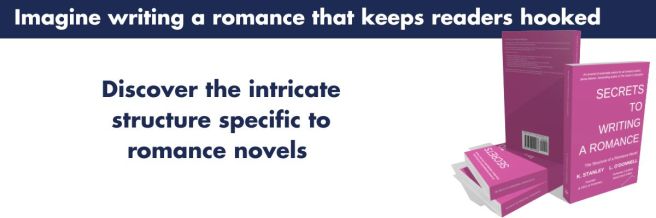
Secrets to Writing a Romance

When people hear I’m a writer, they often respond with something like, “Oh, I’ve been thinking about writing a book,” as if a novel can be conjured up over a long weekend. And when I mention that I write romance, the respect level usually drops, even though it shouldn’t.

Romance is the top-selling genre in fiction, accounting for nearly a quarter of all sales, about $1.5 billion in annual revenue. That’s a lot of readers eager to fall in love with a story. But before you grab your favorite mug, settle in with your keyboard, and start crafting that ode to love, it helps to know that there’s a real precision to storytelling. Writing a strong romance isn’t just about chemistry; it’s about structure that supports emotional payoff.

Learn How to Write a Romance

That idea is what inspired Kristina and me to write Secrets to Writing a Romance. We wanted to help writers understand not just how all stories work, but what makes a romance feel different. Every successful novel relies on what we call the five story arc scenes, the key turning points that give a story its spine. Without that foundation, pacing drags, tension fizzles, and the story can lose its way. Structure holds everything together, even in a genre built on emotion.

If you love romance, you already know that a happy ending, whether it’s a Happily Ever After or a Happy For Now, is non-negotiable. But what many writers don’t realize is that the other story arc scenes in a romance differ from other genres. In our book, we map how romance delivers its emotional beats through its core structure: from the meet-cute, to the admission of attraction, to the middle’s emotional pivot, the break-up moment, and finally the declaration of love. These specialty scenes are what make readers sigh, swoon, and turn the pages late into the night.

Imagine writing a romance with a clear sense of direction, one that keeps readers hooked through every emotional high and low. Secrets to Writing a Romance offers exactly that: a guide to pairing structure with purpose and letting emotion be informed by design. Think of it as a toolkit for crafting love stories that truly work, both on the page in the heart.

Kristina Stanley, CEO and founder of Fictionary, award-winning writer, and the driving force behind The Fictionary School for Writers & Editors, laid the foundation for this book with her deep expertise in story structure. Together, we shaped our shared knowledge into practical strategies romance writers can use.

Tips for Writing a Romance

Each month, I’ll be sharing a blog post with a practical tip from the book, bite-sized lessons on structure, specialty scenes, and emotional craft you can apply to your own project, no matter where you are in the process. I hope you’ll follow along and join the conversation as we explore how to turn the timeless magic of romance into stories that truly connect.

If you’re ready to dive deeper into the craft of romance, Secrets to Writing a Romance is now available in eBook and print. I hope you’ll pick up a copy and bring its tools into your own writing practice. 

Written by Linda O’Donnell

Linda O'Donnell Linda O’Donnell is a writer, certified structural editor, certified copy editor, and a writing and editing instructor. She co-authored Secrets to Writing a Romance with Kristina Stanley and together, they’re working on their latest book, Secrets to Writing a Novel. Linda’s romance novel, Behind the Scenes, is coming soon.

Want to Learn to Self-Edit?

Join the Fictionary School for Writers and Editors

Learn How To Self-Edit #AuthorToolboxBlogHop

Nano Blog and Social Media Hop2

Thank you, Raimey Gallant for organizing the #AuthorToolboxBlogHop. Today is day one of this new series, and I’m very excited to be part of it.

This is a monthly blog hop on the theme of resources/learning for authors: posts related to the craft of writing, editing, querying, marketing, publishing, blogging tips for authors, reviews of author-related products, anything that an author would find helpful.

To kick off this series, I’d like to talk about becoming your own self-editor.

Why Learn How To Self-Edit?

With the advent of self-publishing, there is no one stopping a writer from publishing poor fiction that does not sell.

So what can new fiction writers do to ensure they’ve written a story that works and is ready to share?

They need to complete a big-picture story edit and rewrite the first draft.

Science fiction novelist Michael Crichton agrees when he says: “Great books are not written–they’re rewritten.   

But big-picture editing and rewriting is hard and can take months to complete.

Today, I’ll give you a place to start with a focus on plot. 

Plot describes the events that take place in your story. The events occur in a sequence, and that sequence forms the structure of your novel. You’ll most likely have a main plot and one or two subplots. Your protagonist (main character) follows the main plot. Secondary characters follow the subplots.

Your job as a writer is to evaluate how you’ve written the plot (and subplots) and to rewrite until you’ve created a compelling story for your readers. Then you can move on to word choice, style, and copyediting.

Your plot is made up of scenes. If you make each scene great, have each scene flow from one to the next in a way that makes sense to the reader, and pay attention to the key elements of fiction for each scene, you’ll end up with a great novel.

The first element under PLOT to evaluate is the purpose of the scene. The purpose of the scene must relate to the overall story. If it’s not driving the story forward, ask yourself why you included the scene in your novel.

Once you know the purpose of each scene, you want to test how the flow of your novel is working. To do this, keep track of how you enter and exit each scene.

For entering each scene, do you:

  • Vary the way you enter each scene in your draft?
  • Have a hook that draws the reader into the scene?
  • Anchor the reader in terms of point of view, setting, and timing?

For exiting each scene, do you:

  • Vary the way you end each scene?
  • Have a hook that makes the reader want to start the next scene?
  • Use a technique that connects the current scene to the following scene?

Answer each of the above questions for every scene, use the answers to rewrite the scenes, and you’ll be sure to improve your story.

More Self-Editing Advice

Join the Fictionary School for Writers & Editors

Learn How To Self-Edit #AuthorToolboxBlogHop Opening A Scene

Nano Blog and Social Media Hop2

Thank you, Raimey Gallant for organizing the #AuthorToolboxBlogHop. Today is the fourth post of this new series!

This is a monthly blog hop on the theme of resources/learning for authors: posts related to the craft of writing, editing, querying, marketing, publishing, blogging tips for authors, reviews of author-related products, anything that an author would find helpful.

To continue hopping through other great blogs in the monthly #AuthorToolboxBlogHop or to join, just hop on over to Ramey Gallant!

I’ll focus my entire series on self-editing. Here is what I’ve covered so far in the series:

Today’s topic is OPENING A SCENE.

Treat every scene like you would treat the opening scene in your novel. You’ve got to hook the readers so they don’t put your book down. You want them to be so intrigued by your scene opening, that they HAVE to keep reading.

You can do this be evaluating the scene opening type,  the scene entry hook, and scene anchoring.

Scene Opening Type

Don’t Bore Your Reader With Repetitive Scene Opening Types. You have four choices for scene opening type:

  • Dialogue
  • Thought
  • Description
  • Action

Go through each scene of your novel and label the scenes with one of the above. Then check that you haven’t been repetitive. Do many scenes in a row starting with one type is tiresome.

Scene Entry Hook

Get The Reader’s Attention With A Great Scene Hook

When creating a scene entry hook, consider:

  • Starting in media res (opening in the middle of action)
  • Foreshadowing trouble
  • Using a strong line of dialogue
  • Raising a question
  • Not wasting words on extraneous description

After your first draft is complete, check each scene and list how you created a hook. As with the scene opening type, you want to vary the method you use. Variety will keep the reader engaged.

Scene Anchoring

Anchor Your Readers, And They Won’t Put Your Book Down

Anchor The Point Of View:

Check whether the reader will know who has the point of view within the first paragraph or at least within the first couple of paragraphs of each scene. If not, the reader might find this frustrating.

If you write your entire novel from one point of view, like many first-person novels, then you don’t need to worry about this.

Anchor The Setting:

You know where the character is because you wrote the scene, but does your reader? If the reader can’t figure out the setting within the first couple of paragraphs, you may lose them–the reader I mean and not the character.

There are exceptions to this. If your scene is about a character waking in a dark place and confused about where she is, then it’s okay for the reader to be confused about where she is, too. This will add to the tension. The reader does need to understand the lack of setting is done on purpose

Anchor The Timing:

 The timing of the scene can mean:

  • Time of day
  • Time passed since the previous scene
  • A particular date

Your readers will get disoriented if they can’t follow the timeline. Check each scene and make sure the timing is clear.

Want to Learn to Self-Edit?

Join the Fictionary School for Writers and Editors

Learn How To Self-Edit #AuthorToolboxBlogHop Emotional Impact of Setting

Nano Blog and Social Media Hop2

Thank you, Raimey Gallant for organizing the #AuthorToolboxBlogHop. Today is the third post of this new series, and I’m very excited to be part of it.

This is a monthly blog hop on the theme of resources/learning for authors: posts related to the craft of writing, editing, querying, marketing, publishing, blogging tips for authors, reviews of author-related products, anything that an author would find helpful.

To continue hopping through other great blogs in the monthly #AuthorToolboxBlogHop or to join, just hop on over to Ramey Gallant!

I’ll focus this entire series on self-editing. The first blog in my series covers Why Learn To Self-EditThe second blog covered Characters In The Context of Editing.

Today’s topic is setting.

THE EMOTIONAL IMPACT OF SETTING

I once read a book where I didn’t skim any of the setting descriptions. Afterward, I wondered why. Engaging settings generate emotion.

I admit I’m impatient with too much description. To learn what captured me, I re-read the book and highlighted every sentence that described the setting. I realized the author only described things or places that were relevant to the plot.

That was the moment I went on a mission to learn everything I could about setting and how to use it to make my novels more enjoyable.

Location

Location is the place where a scene happens. 

When describing the location, ask yourself: Is the location important to the plot, characters, or theme? If no, fewer details are required. If yes, be more generous with the details.

Once you’ve determined the location for each scene, ask yourself if the setting is the best place for emotional impact. This one little question helps you:

  • Increase or decrease conflict
  • Increase or decrease tension
  • Set the mood
  • Highlight emotion
  • Show characterization
  • Slow down or speed up pacing

Thinking about location in terms of emotional impact will wake up your creativity. Let me give you an example.

Suppose you have a character who is afraid of the dark. Imagine the character is about to have a confrontation with an employee. If the character feels confident being in his office and you want the character to be in a position of strength, then use the office as a setting.

If you want him to feel vulnerable during the confrontation, try locating him outside, at night, in an isolated parking lot. And make it very dark. The streetlight is broken. There is no moon. Maybe it’s windy, so a yell for help won’t be heard.

Do you see the difference? The location can help you bring out emotion in the scene by showing conflict, tension, mood, and characterization. Conflict is action that is happening. Tension is the suspicion/dread something will happen.

You decide what emotion you want the reader to feel, then decide how the location can help elicit that emotion.

If you think the location is not the best place for emotional impact, it’s time for a rewrite. Set the scene where you can elicit strong emotions, then rewrite the scene in that location.

More Self-Editing Advice

Join the Fictionary School for Writers and Editors